Cycle Workshop & Service App
Transforming a fragmented, paper-based bicycle repair industry into a transparent digital service connecting cyclists and mechanics.


The Context & Problem
The bicycle repair industry in Sweden relies heavily on manual processes and handwritten paper tags. Cyclists frequently face opaque pricing and long wait times, while mechanics struggle with administrative overhead, cluttered workspaces, and liability disputes. The goal was to create a digital ecosystem that simplifies repair management while preserving the physical workflows mechanics already depend on.

A mechanic on the frustration of administrative errors said
"someone writing down the wrong number... For example a woman wrote down her son's phone number. And I text the person and he said, 'No, that's not me.'... So now I have the bike stuck here for a few days."
Another mechanic on the technological limitations of his staff said
"we don't use any computers because my employees don't have the enough knowledge to work with the computers as most of them are above 50 plus in age.
My Role & The Research
Leading the end-to-end UX process, I conducted contextual interviews inside local repair shops to observe actual workflows.
A critical finding was the "dirty hands" constraint: mechanics operate with greasy hands and limited attention. They cannot use complex software or tiny dropdown menus while holding heavy bicycles. This insight dictated that any digital solution must adapt to their physical environment, requiring large touch targets and minimal typing.


The Solution & Core Features
Visual Diagnosis & Smart Broadcast
Customers upload a photo of their bicycle issue, which is broadcasted to nearby shops for quick quotes. This removes technical jargon for the cyclist and provides immediate visual context for the mechanic.
Mobile-First Task Management
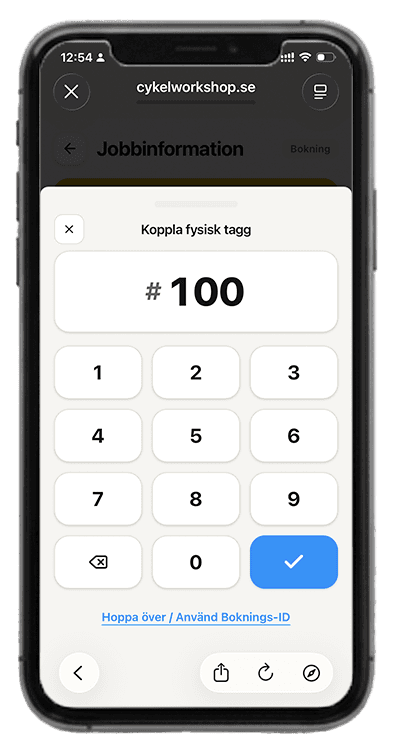
To solve the "dirty hands" constraint, traditional data grids were replaced with a message-style mobile inbox featuring massive, bottom-fixed action buttons for easy, single-thumb navigation.
Bridging Physical and Digital (The Token System)
I replaced handwritten paper tags with permanent physical numeric tokens (e.g., Tag #100) that link directly to a digital repair record in the app. This maintained familiar workshop behaviors without requiring expensive label printers


Retrospective & Architecture
This project reinforced that great UX is not about introducing new technology, but fitting it seamlessly into existing human behaviors.
By observing the mechanics in their actual workspaces, I learned that designing for extreme physical constraints—like greasy hands and tech-skepticism—required abandoning standard UI patterns. I realized that forcing a complex digital dashboard on them would fail; instead, the solution had to respect their established physical routines. Developing the hybrid numeric token system taught me a valuable lesson: real-world constraints are not roadblocks, but the ultimate drivers of practical innovation
Technical Foundation
While the design prioritizes human workflows, the ecosystem is built on a secure foundation to ensure trust. The system utilizes SMS OTP verification and GDPR-compliant "Sanitized Views" to protect customer privacy until a bid is accepted.
This project is designed using Figma and Adobe CC. Developed using Lovable, with Supabase as backend.